Table Of Content
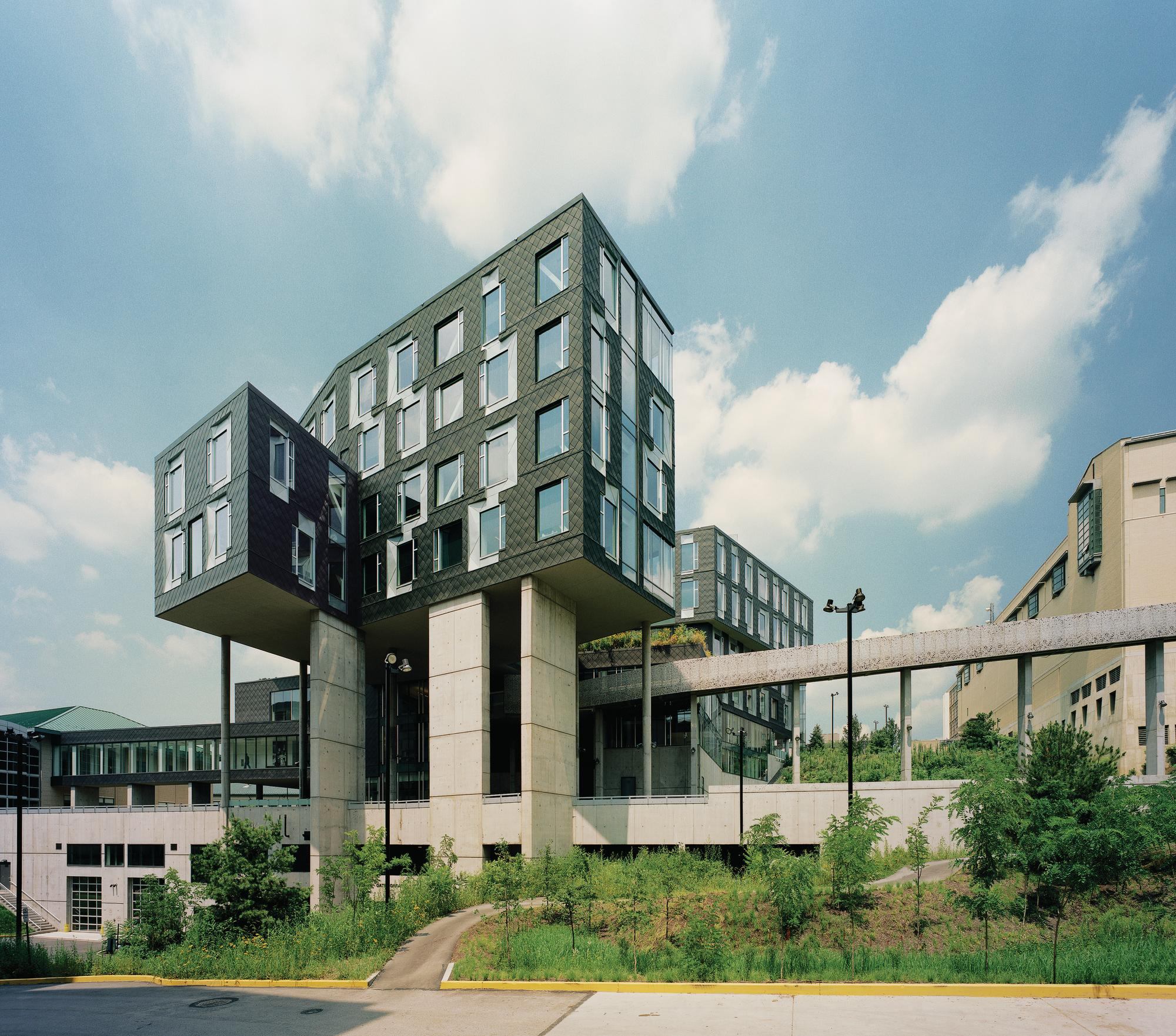
There are two Asian American interest sororities – Alpha Kappa Delta Phi and Kappa Phi Lambda –, and one Asian American interest fraternity – Lambda Phi Epsilon. The northwestern part of the campus (home to Hamburg Hall, Newell-Simon Hall, Smith Hall, and Gates Hillman Complex) was acquired from the United States Bureau of Mines in the 1980s. Carnegie Mellon's 157.2 acre (63 ha) main campus is five miles (8 km) from downtown Pittsburgh, between Schenley Park and the neighborhoods of Squirrel Hill, Shadyside, and Oakland.[5] Carnegie Mellon is bordered to the west by the campus of the University of Pittsburgh. Carnegie Mellon owns 81 buildings in the Oakland and Squirrel Hill neighborhoods of Pittsburgh.
FAQs by Program
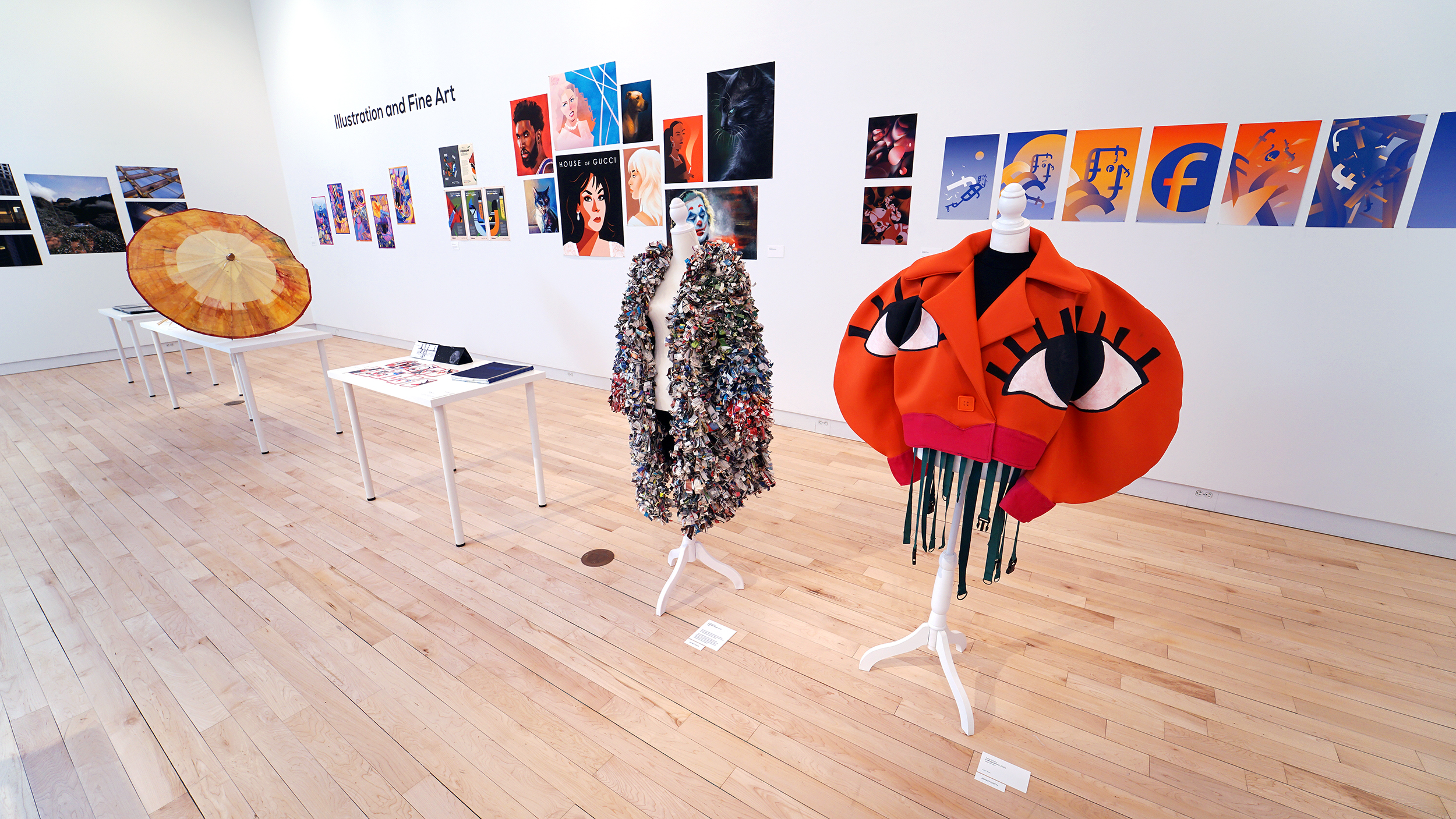
In a competitive global marketplace, businesses and institutions are embracing the value of design, and the demand for professionals in the field has never been greater. Here at the School of Design, we offer a Bachelor's of Design (BDes), a BXA and a Minor in Design. School of Design graduates enter the field with the technical and collaborative skills and perspectives to confront real problems, recognize opportunities, and create innovative propositions and solutions that have impact and purpose in the world. Whether working with worldwide corporate sponsors, local non-profits, or peers in the classroom, you’ll engage in projects that have the potential to yield positive outcomes for society.
Master's Program Admissions
Every two years, the organizations vote on a cause to support and raise money through ticket sales, ad sales, corporate sponsorships and donations. Each organization performs a 13-minute-long original show or a rendition of a popular show. In spring 2010, Greek Sing raised over $42,000 for St. Jude Children's Research.
Introducing Lemon, CMU's Student-Led Arts Publication
At the end of their first year, students are given the opportunity to begin to focus their interests in two of three design areas (products/communications/environments) and will eventually decide upon a single area of focus or a dual path of study. For non-majors, minoring in design is a great way to diversify your studies and incorporate design skills and thinking into your overall academic experiences. The School of Design is composed of faculty, students, and staff who chose to relocate to Pittsburgh from around the world to live, work, and learn. We appreciate and welcome the diverse cultural practices that members infuse into our community. Not only does this diversity deepen everyone’s understanding of the world, but it also strengthens us as designers. The MA program helps students with non-design backgrounds to expand their understanding of the field through an education in the fundamentals of design.
During Cohon's presidency, Carnegie Mellon continued its trajectory of innovation and growth. His strategic plan aimed to leverage the university's strengths to benefit society in the areas of biotechnology and life sciences, information and security technology, environmental science and practices, the fine arts and humanities, and business and public policy. In 2006, following negotiations between President Cohon and South Australian Premier Mike Rann, CMU opened a campus of the Heinz College in the historic Torrens Building in Adelaide, Australia. President Cohon's term ended on June 30, 2013, after which he returned to the faculty at Carnegie Mellon.
Engineering Design Innovation and Entrepreneurship (EDIE)
Graduates of our programs work as designers, researchers, educators, and entrepreneurs across a vast range of industries in multinational tech, service, and manufacturing companies and design firms; nonprofits, government, healthcare; their own ventures; and colleges and universities. These options in CSS Grid allow you to create something much more dynamic and flexible in interesting ways. You can create two stages of flexibility, because the fr-unit sized columns grow and shrink in a separate stage from the minmax()-sized columns. The max-content and min-content values let you size the columns based on the content size, rather than sizing the content based on the column size. The fr units can easily be used to create compound or asymmetrical grids, where the columns are different sizes. It’s quite possible that because this layout has required JavaScript, anything more creative or complex has been too hard to pull off — and we’ve been left with an expectation that masonry layout should only ever be a simple pattern with uniformly-sized columns.
Technologists in the studio, artists in the lab.
It is one of the ways designers work through their ideas and effectively share their thinking with others. Through guided exercises, students are introduced to ways in which they can make their drawings a stronger communication tool, as well as a useful part of the problem-solving process. Studio courses allow students to experience the iterative process designers use when developing their best solutions. Teachers guide students through the problem-solving process, introducing basic tools (i.e., sketching, diagramming, prototyping) along the way. We welcome students from every discipline to the unique learning environment that exists at Carnegie Mellon. The MAAD program makes extensive use of the Design Fabrication Laboratory (dFAB) in the School of Architecture.
Coursework combines theory and practice and frequently focuses on social, technological, economic, environmental, and political concerns that exist in areas such as healthcare, education, transportation, and business. These key factors shape our school and inform the thinking, methods, and responsible practice of designers who graduate from the School of Design. Our PhD in Transition Design prepares future design leaders to envision and help design purposeful change in the world across a range of complex systems, from natural resources and policy to culture, economies, cities, and social movements. In addition to offering a self-funded route, we offer a small number of teaching fellowships to qualified applicants. The School of Design programs and curricula, as well as the research and practice expertise of our faculty, are not only foundational to the essential traditions of design but also responsive to existing and anticipated changes in the discipline.
Carnegie Mellon University
Most of the products and communications we interact with are situated within complex physical spaces (our homes, classrooms, places of business, shopping malls, even amusement parks). We also interact with complex online environments such as large websites, social networking and virtual reality environments. And increasingly we interact in ‘smart’ physical spaces with multi-modal communications in a combination of the analog and the digital.
Department Visits - Civil and Environmental Engineering - Carnegie Mellon University
Department Visits - Civil and Environmental Engineering.
Posted: Tue, 19 Sep 2023 20:53:34 GMT [source]
The university is also featured prominently in the films Smart People, Monkey Shines, and in the anime Summer Wars. While personal laptops are highly recommended, and most students find it is convenient to have their own laptops, it is not required. Work created in this program may be excellent material to package for a student portfolio. At the conclusion of the program, faculty will be available to provide feedback on portfolios. Design Research & Problem-Solving Methods will serve as an introduction to the way designers gather meaningful data and to the tools required to apply that data to their design solutions. IDeATe students at Carnegie Mellon are best able to articulate why this experience is important to them.
MIIPS Students Engage with Industry Leaders in Weekly Seminar - Integrated Innovation Institute - Carnegie Mellon University
MIIPS Students Engage with Industry Leaders in Weekly Seminar - Integrated Innovation Institute.
Posted: Thu, 29 Feb 2024 08:00:00 GMT [source]
You’ll build a portfolio and gain skills in areas like interactive narrative, visual and audio asset creation, programming, interface design and user testing. Carnegie Mellon is at the forefront of both the arts and technology — so naturally, we have programs that unite them in unexpected and unprecedented ways. Through our Integrative Design, Arts, and Technology minors — or IDeATe, for short — you can supplement your major with a unique combination of disciplines, so you can build expertise in an emerging field that’s all kinds of cool. Studio courses and faculty research frequently include industry and research projects—which means you’ll have exciting opportunities to interact with and present to professional designers, or even work as a research assistant. Students may enroll for no more than 18 units of independent study courses, and no more than one independent study per semester.
Working with experts from many different disciplines, you’ll create experimental music, delve into technology-enabled applications and explore new markets for sound design, music creation and performance. In the senior year, students work to identify their next steps in professional practice, entrepreneurship, or in academia. They apply their design skills and knowledge to client-based and/or self-defined projects that focus on the design of services or social innovation. Students learn to design for complex environments that exist in the digital, physical and multi-modal realms.
Basically it’s the pattern seen in the following image — where content packs together like a brick or stone wall. It’s also frequently called “waterfall layout”, as a metaphor for how content flows down the page like a waterfall. “We started looking for opportunities to work together,” said Weschler, “but nothing stuck until Rick came to us with ‘Water for Elephants’...” The rest, as they say, is history.
The university also runs Carnegie Mellon Pre-College, a six-week residential program for rising juniors and seniors in high school and the Summer Academy for Math and Science (SAMS), a free-of-charge STEM immersion program for students from underrepresented backgrounds. The Cyert Center for Early Education is a child care center for Carnegie Mellon faculty and staff, as well as an observational setting for students in child development courses. Carnegie Mellon also developed the Open Learning Initiative which provides free courses online in a variety of fields to students globally. On April 15, 1997, Jared L. Cohon, former dean of the Yale School of Forestry & Environmental Studies, was elected president by Carnegie Mellon's board of trustees.